Is Xander Bogaerts bad or just unlucky?
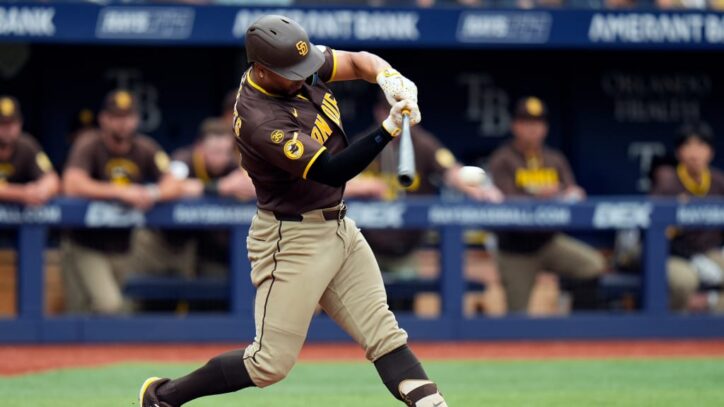
AP Photo
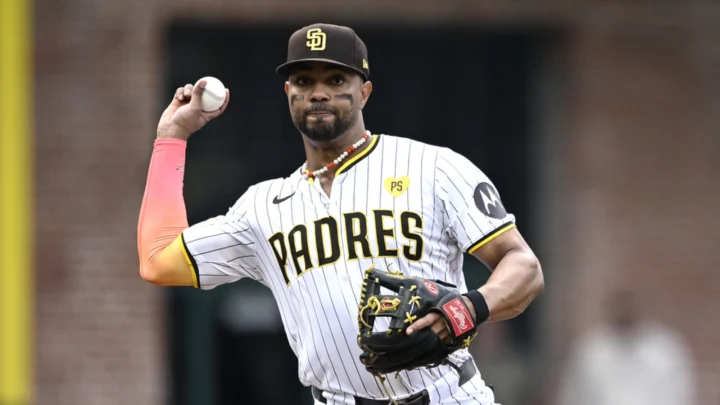
The San Diego Padres are back to their usual post-All-Star Break baseball.
Nearly every part of the Padres roster is playing well. This includes new free agents and waiver additions like Ty France and Luis Rengifo. However, Xander Bogaerts has yet to join his friends for the party.
Xander Bogaerts signed an 11-year, $280 million contract with the San Diego Padres ahead of the 2023 season. His inaugural season with the Friars was a fantastic start. In 2023, he posted a 4.2 bWAR season, a slight dip from the year before but still very good. However, since that year, Bogaerts has seemed to decline.
The 2026 regular season is no different, and now with the Padres deep into a playoff push, if there were any time for the 33-year-old to activate, now would be it.
As of writing, Bogaerts has the lowest hits, home runs, and OPS of the qualified Padres. At one point, Bogaerts enjoyed an earlier placement in the starting nine, but lately he’s been batting seventh or eighth.

However, one look at his player profile indicates that, as far as 2026 is concerned, Bogaerts’ production may not be entirely his fault. In fact, he may be having one of the most unlucky seasons in all of Major League Baseball.
Luck is a relative concept and, for the most part, isn’t a factor in statistics. However, sabermetrics offers several methods for measuring how “unlucky” a player may be. This is possible through expected stats and how often a player is converting balls in play into hits.
In general, Bogaerts is amongst the top ten worst in BABIP amongst qualified players at .245. It’s not just one of the worst in the league but the worst of his career so far. This immediately suggests something more may be going on with The X Man’s season.
Manny Machado does have a worse BABIP than Bogey. However, Machado’s similarly low BABIP demonstrates why that alone cannot explain a hitter’s season. Despite receiving even fewer hits on balls in play, Machado offsets some of that misfortune with considerably more power. At the moment, he leads the Padres in homers and is three off Fernando Tatis Jr. in XBH.
Bogaerts, meanwhile, has lacked the same level of extra-base production, making every lost hit more damaging to his overall offensive numbers. It’s not that Bogey is merely producing a low BABIP. He is producing batted balls that Statcast considers highly likely to become hits, but an unusual number of them result in outs.
Bogey has a 44% pull rate on all batted balls. 47 of his 94 base hits this season are to the pull side. Despite this, on an eye test alone, Bogaerts’ pull-side contact has often led to spectacular outs, either through opponent athleticism or the ball landing directly in a fielder’s glove.
Xander Bogaerts lines out to third baseman Max Muncy. EV 106.6 LA 6° xBA 0.629 pic.twitter.com/DBGSHKEbgP
— Fabian Garcia (@offthebright) August 31, 2026
Bogaerts expected hitting stats support this caveat.
On pull-side batted balls, Bogey averages 309. However, his xBA on these balls is .344. That’s a near 40-point difference, a very significant dropoff from where it should be. This means the quality of his contact has deserved more hits than it has produced.
Now, expected stats are exactly that. The numbers produced are based primarily on the characteristics of the batted ball and historical outcomes. It can’t really account for factors like defensive positioning.
What’s slightly more compelling is the fact that the rest of his expected offensive statistics follow suit.
Across the board, Xander Bogaerts’ expected numbers taper significantly from where they should be. His SLG and xSLG combine for a -0.57 difference; meanwhile, wOBA and xwOBA combine for a -0.34 difference. Among all qualified shortstops in the league, this is the largest difference in both categories. It’s also worth noting that this is the most significant difference as far as qualified Padres batters are concerned.
As stated earlier, there are several ways this is possible. Expected statistics are not a flawless measure. However, they offer a reasonable interpretation of what could be transpiring on the field. The fact is that baseball can be a random game with wild outcomes that deviate from expected results more often than one would think.
It’s entirely possible that Bogaerts’ affinity for landing balls into the opposing fielder’s glove may indicate bad luck or could point to a predictable approach that consistently creates these negative outcomes.
Xander Bogaerts lines out to third baseman Brooks Lee.
EV 106.2 LA 8° xBA 0.671 pic.twitter.com/gSn9vpEqYy— Fabian Garcia (@offthebright) August 31, 2026
None of this necessarily suggests Bogaerts has been an elite hitter overshadowed by poor fortune. All the numbers in the world couldn’t distract from the facts that are on the field.
In terms of slugging and wOBA, if Bogey had perfect luck, his numbers would still fall below the average. While it’s okay to see Xander Bogaerts as a victim of poor outcomes, it doesn’t really excuse the reality of the season he is actually having. As of right now, there is no outcome where Xander is performing at what his contract dictates. Only slightly better than he’s doing now.
Therefore, bad luck shouldn’t be treated as an excuse for Bogaerts’ season. Rather, a reasonable conclusion derived from unfortunate baseball realities. The overall quality of contact is a far better indicator of Bogaerts’ commitment to putting up consistent at-bats. They may indeed not all have the outcome he wanted, but he’s still very capable of making solid plays.
The real indicator of success is how he plans to adjust and make those expected outcomes a reality, and then some.
